


Airbrushing Purchase Guide
The first time you watch a skilled airbrush artist work feels almost like magic—smooth gradients that seem to materialize from nowhere, photorealistic details that no traditional brush could replicate, colors that transition so seamlessly they appear to glow from within the surface. Then you pick up an airbrush yourself and discover the reality: sputtering paint, inconsistent spray patterns, clogs at the worst possible moments, and overspray that settles everywhere except where you intended.
Here's what separates frustrating airbrush experiences from successful ones: understanding that airbrushing is fundamentally different from any other painting technique. You're not just applying paint—you're managing air pressure, paint viscosity, distance from surface, trigger control, and paint flow simultaneously. It's precision equipment that demands precision technique, but once you understand how these variables interact, the airbrush becomes one of the most versatile tools in any artist's arsenal.
The Airbrushing Reality: Success comes from three equally important factors—proper equipment matched to your needs, consistent practice with fundamental techniques, and understanding how different paints behave when atomized. Skip any of these and you'll struggle regardless of how much you spend on equipment.
⚠️ Important:
Non-Negotiable Safety: Always use proper ventilation and respiratory protection when airbrushing. Many paints and solvents release harmful vapors. Work in well-ventilated areas or use spray booths with exhaust systems.
Complete Guide Navigation
Getting Started: Your Airbrush Decision Framework
Fine Art & Illustration
Best For: Detailed artwork, photo retouching, watercolor effects
Recommended: Gravity-feed, double-action airbrush with 0.2-0.35mm nozzle
Pressure Range: 15-25 PSI
Popular Brands: Iwata Eclipse, Badger Patriot, Harder & Steenbeck
Model Making & Hobbies
Best For: Scale models, miniatures, crafts
Recommended: Single or double-action, 0.3-0.5mm nozzle
Pressure Range: 20-30 PSI
Popular Brands: Badger Air-Brush Co., Paasche VL, Iwata Neo
Automotive & Large Surfaces
Best For: Car graphics, murals, large coverage
Recommended: Siphon-feed, larger nozzles (0.5mm+)
Pressure Range: 25-40 PSI
Popular Brands: Iwata Custom Micron, Badger Anthem, Paasche Talon
Textiles & Body Art
Best For: T-shirts, fabric, temporary tattoos
Recommended: Gravity or siphon-feed, 0.3-0.5mm nozzle
Pressure Range: 15-30 PSI
Popular Brands: Badger Air-Brush Co., Iwata Revolution, Paasche VLS
Step 2: Choose Your Airbrush Type
| Airbrush Type | Control Level | Best For | Price Range | Popular Models |
|---|---|---|---|---|
| Single-Action | Basic | Beginners, base coats, large areas | $30-150 | Badger 250, Paasche H, Iwata Neo CN |
| Double-Action | Advanced | Detail work, professional art | $80-500+ | Iwata Eclipse HP-CS, Badger Patriot 105, Harder & Steenbeck Ultra |
| Independent Double-Action | Expert | Professional illustration, complex work | $200-800+ | Iwata Custom Micron CM-C2, Badger Sotar 20/20 |
Frequently Asked Questions About Airbrushing
What's the best airbrush for a complete beginner?
The Iwata Neo CN or Badger Patriot 105 offer the best balance of control and ease of use for beginners. Both are gravity-feed, double-action airbrushes with 0.35mm nozzles that work well with most paints and applications.
Do I need an expensive compressor for airbrushing?
For hobby use, a reliable diaphragm compressor like the Badger Air-Brush Co. TC910 or Iwata-Medea Studio Series Smart Jet works well. Professional artists benefit from piston compressors like the California Air Tools models for consistent pressure and longer duty cycles.
Can I use regular acrylic paint in an airbrush?
Regular acrylics like Golden Fluid Acrylics or Liquitex can be used but must be thinned with airbrush medium or distilled water (typically 10-30% thinner). Airbrush-specific paints like Createx Wicked Colors or Vallejo Model Air are pre-thinned and formulated for optimal atomization.
How often should I clean my airbrush?
Clean between every color change and thoroughly after each session. For water-based paints like Createx or Vallejo, flush with distilled water. For solvent-based paints, use appropriate thinners (Createx 4011 Reducer, Vallejo Thinner) followed by water.
What safety equipment do I need for airbrushing?
Essential safety gear includes a NIOSH-approved respirator (3M 6000 series or similar), safety glasses, and adequate ventilation. Consider a spray booth like the Master Airbrush Portable Hobby Airbrush Spray Booth for regular indoor use.
Which airbrush brands are most reliable?
Top-tier brands include Iwata (known for precision and durability), Badger (excellent value and customer service), Harder & Steenbeck (German precision), and Paasche (American-made reliability). Each offers different strengths for various applications and budgets.
Understanding Airbrush Types & Feed Systems
Different feed systems offer unique advantages for various applications. Understanding these differences helps you choose the right airbrush for your specific needs.
Feed System Comparison
Gravity Feed
Advantages:
- Uses paint efficiently - works with small amounts
- Easy color changes
- Lower air pressure required
- Less waste
Best Models: Iwata Eclipse HP-CS, Badger Patriot 105, Harder & Steenbeck Ultra 2in1
Best For: Detail work, fine art, color mixing
Siphon Feed (Side)
Advantages:
- Clear view of work surface
- Interchangeable color cups
- Good for precision work
- Easy to balance
Best Models: Paasche VLS, Badger Crescendo 175, Iwata Revolution HP-CR
Best For: Detail work where visibility is crucial
Siphon Feed (Bottom)
Advantages:
- Large paint capacity
- Can use bottles directly
- Great for production work
- Less frequent refilling
Best Models: Paasche VL, Badger 200, Iwata Custom Micron CM-SB
Best For: Large projects, production work, base coating
💡 Pro Tip:
Pro Tip: Start with a double-action airbrush even as a beginner. The Iwata Neo CN and Badger Patriot 105 have manageable learning curves, and you won't outgrow them as quickly as single-action models. The additional control is worth the initial investment in practice time.
Compressors & Air Systems
Your air source is as important as your airbrush. Consistent, clean, dry air is essential for professional results.
| Compressor Type | Pressure Range | Noise Level | Best For | Popular Models |
|---|---|---|---|---|
| Diaphragm | 10-40 PSI | Quiet | Hobby use, intermittent work | Badger TC910, Iwata Smart Jet, Paasche D3000R |
| Piston (Oil-less) | 0-60+ PSI | Moderate | Professional use, continuous work | California Air Tools CAT-1P1060S, Badger BA-74, Master TC-77 |
| Piston (Oil) | 0-100+ PSI | Quiet | Heavy professional use | California Air Tools CAT-4620AC, Silentaire Scorpion II |
| CO2 Cartridges | Variable | Silent | Portable work, demonstrations | Badger Propel, CO2 Art Pro-Elite, Iwata Power Jet Lite |
Energy-Efficient Air Solutions
Modern compressors like the California Air Tools ultra-quiet series use significantly less energy than older models. Oil-free compressors eliminate disposal concerns, and CO2 systems offer zero-emission options for portable work, though cartridge disposal should follow local recycling guidelines.
Airbrush Paints & Mediums
Airbrush paints are specially formulated for optimal atomization and smooth application. Understanding paint types helps you choose the right medium for your project.
| Paint Base | Durability | Cleanup | Dry Time | Popular Brands |
|---|---|---|---|---|
| Water-Based Acrylic | Good | Water | 5-15 minutes | Createx Wicked, Vallejo Model Air, Golden Airbrush |
| Solvent-Based Acrylic | Excellent | Solvent | 2-5 minutes | House of Kolor, Auto Air Colors, Createx Auto-Borne |
| Urethane | Excellent | Solvent | 10-30 minutes | House of Kolor Urethane, PPG, Dupli-Color |
| Fabric Paint | Good (flexible) | Water | 15-30 minutes | Createx Fabric, Dharma Trading, Jacquard Airbrush |
Paint Thinning & Consistency Guidelines
- Water-based acrylics: Thin with distilled water or airbrush medium (Createx 4012, Vallejo Airbrush Thinner)
- Proper consistency: Paint should flow like milk when correctly thinned
- Typical ratios: 10-30% thinner for most applications
- Strain before use: Use fine mesh filters to remove particles that could clog nozzles
Cleaning & Maintenance
⚠️ Important:
Critical Success Factor: Proper cleaning is the #1 factor in airbrush longevity and performance. A clean airbrush performs like new; a dirty one is frustrating and unreliable.
Essential Cleaning Supplies
- Cleaning brushes: Iwata cleaning brush set, Badger cleaning brush kit
- Cleaning solutions: Createx Restorer 4020, Vallejo Airbrush Cleaner, Iwata-Medea Airbrush Cleaner
- Lubricants: Iwata Lube, Badger Regdab, Super Lube for seals and needles
- Replacement parts: Keep spare needles, nozzles, and seals for your specific airbrush model
💡 Pro Tip:
Paint Consistency Pro Tips:
• Test consistency: Paint should flow like milk when properly thinned
• Add thinner gradually: Start with 10% and increase as needed
• Strain paint: Use fine mesh to remove particles that could clog the airbrush
• Temperature matters: Warm paint flows better than cold paint
Safety & Health Guidelines
⚠️ Important:
Health First: Airbrushing involves atomized particles and chemical vapors. Proper safety equipment isn't optional—it's essential for your long-term health.
Essential Safety Equipment
- Respirator: 3M 6000 Series, North 7700 Series, or similar NIOSH-approved masks
- Ventilation: Master Airbrush Spray Booth, Pace Arm-Evac fume extractors
- Eye protection: Safety glasses to prevent particle contact
- Skin protection: Nitrile gloves, long sleeves when using solvents
- Fire safety: Proper storage and disposal of flammable materials
History of Airbrushing
The concept of airbrushing dates back to cave paintings, where early artists used hollow bones and reeds to spray pigments. The modern airbrush was invented in 1893 by Charles Burdick, revolutionizing photo retouching and commercial art. Companies like Paasche (founded 1904) and Badger (founded 1946) helped establish airbrushing as both an artistic medium and industrial tool. Today's digital age has expanded airbrushing into new realms including automotive customs, body art, and mixed-media fine art.
Shop Airbrushing Supplies by Category
Airbrushes
Airbrushes for every application and skill level:
- Single-action airbrushes: Badger 250, Paasche H-Series, Iwata Neo CN for beginners
- Double-action airbrushes: Iwata Eclipse HP-CS, Badger Patriot 105, Harder & Steenbeck Ultra for detailed work
- Gravity-feed models: Iwata Custom Micron CM-C2, Badger Sotar 20/20 for fine detail and efficient paint use
- Siphon-feed models: Paasche VL, Badger 200 for large projects and production work
Compressors & Air Sources
Compressors and propellants for reliable air supply:
- Diaphragm compressors: Badger TC910, Iwata Smart Jet for hobby and intermittent use
- Piston compressors: California Air Tools CAT-1P1060S, Badger BA-74 for professional operation
- Portable CO2 systems: Badger Propel, CO2 Art Pro-Elite for demonstrations and field work
- Air accessories: regulators, moisture traps, and quick-disconnect fittings
Paints & Mediums
Airbrush paints and mediums:
- Water-based acrylics: Createx Wicked Colors, Vallejo Model Air, Golden Airbrush for general art
- Solvent-based paints: House of Kolor, Auto Air Colors for automotive and outdoor applications
- Specialty paints: Createx Pearl, Vallejo Metal Color, Testors Metallics for special effects
- Thinners and mediums: Createx 4012 Reducer, Vallejo Airbrush Thinner for paint modification
Essential Accessories
Complete your airbrushing setup with essential accessories:
- Frisket materials: Grafix Frisket, 3M Automotive Masking for stenciling
- Templates and stencils: Artool Freehand series, Createx stencils for repeated designs
- Cleaning supplies: Iwata cleaning kits, Createx Restorer 4020 for maintenance
- Storage solutions: Badger storage racks, Iwata airbrush holders for paints and equipment
- Spray booths: Master Airbrush Portable Booth, Pace Arm-Evac for workspace control
- Replacement parts: needles, nozzles, and seals for all major brands
Complete Systems & Kits
Airbrush sets and kits for beginners and professionals:
- Starter kits: Iwata Neo Beginner Set, Badger Air-Brush Co. starter systems with compressor and basic supplies
- Professional systems: Iwata Revolution series, Badger Sotar professional kits for commercial applications
- Educational kits: classroom sets with multiple airbrushes for schools and training programs
- Specialty kits: automotive painting sets, fabric art kits for specific applications
Learning Resources
Books and instructional media:
- Technique guides: "Airbrush Action" magazine, Craig Fraser instruction books for different skill levels
- Application-specific instruction: automotive, fine art, and model painting techniques
- Video tutorials: DVD courses from industry professionals
- Reference materials: color mixing guides and effect techniques
Types of Airbrushes
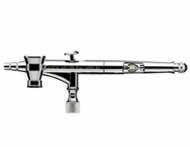
Siphon Feed, Side Mount
Side-mounted reservoirs like the Paasche VLS and Badger Crescendo 175 provide clear visibility of the work surface, essential for precision detail work and fine illustration.
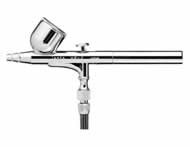
Gravity Feed
Gravity-fed systems like the Iwata Eclipse HP-CS and Badger Patriot 105 work efficiently with small paint quantities and allow for easy color changes, perfect for artistic applications.
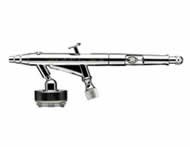
Siphon Feed, Bottom Mount
Bottom-feed systems like the Paasche VL and Badger 200 can hold larger paint quantities for extended work sessions, ideal for production environments and large coverage areas.
Shop Airbrushing Equipment & Supplies
Professional airbrush systems and supplies for every application
Eclipse Takumi Side Feed Airbrush
by Iwata

$249.73
Eclipse HP-CS Airbrush
by Iwata

$203.24
Eclipse HP-BCS Airbrush Kit
by Iwata

$158.03
External Mac Valve
by Iwata

$28.93

$38.06
Finger Lever Assembly
by Paasche

$9.31
BT 010 Braided Air Hose
by Iwata

$25.26
Bloodline Flexible Adhesion Promoter
by Createx

$5.83


